Posts

What's the matter with Leadership?

Image
In spite of the dedication to developing good leaders, bad leadership continues like a plague. Not necessarily corrupt or evil leadership, but the ubiquitous types of bad leadership such as incompetent, rigid, intemperate, and callous leadership. Worse, we seem to be suffering from a crisis of confidence in our political, government, enterprise, and community leaders who are charged with leading wisely and well.  Barbara Kellerman is the James MacGregor Burns Lecturer in Public Leadership at Harvard University's John F. Kennedy School of Government. In her book,  "The End of Leadership"  she writes, "the leadership industry is self-satisfied, self-perpetuating, and poorly policed... by and large these are trying times, in which the  leadership class  has not exactly distinguished itself". Kellerman points out that there seems to be a fundamental disconnect between our idea of the leader as a central figure in our collective consciousness and th...
Smart is not the same as Wise!

Image
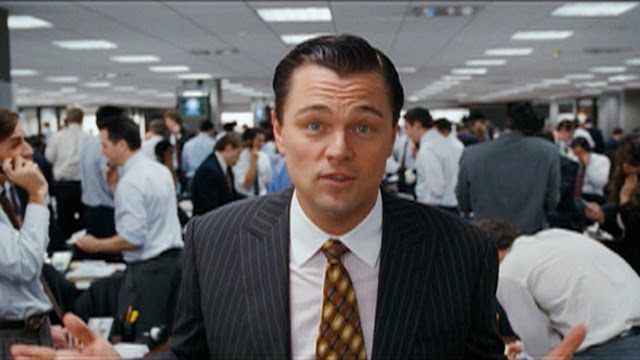
I n October 2008, the world entered into a recession unequaled since the Great Depression of 1929. Many people, including economists, thought that such a recession was no longer even possible. What made the recession particularly odd is that it came after, not before, investment banking started attracting the best and the brightest among the graduates of the top universities in the world. How could such smart people have created so much misery for so many people?   Even more curiously, how could these smart people have then tried to profit from the misery they created, so ignorant of its repercussions that the CEO of Goldman Sachs, Lloyd Blankfein, referred to the company as doing "God's work?" This was the same company that later was revealed to be betting its own funds against the funds of clients who paid Goldman Sachs for financial advice. Smart people can be so stupid, or to be exact, foolish, because they are unwise. Having intelligence is not the same as bei...

Developing Mindful Leadership

Image
Organisations like Google, Sony, Goldman Sachs, Aetna, Volkswagen Audi, IF Insurance, and AXA Asia are using mindfulness training for workplace attentional skills and authentic leadership development. It's not about employee stress management or health and fitness. Mindfulness training is proving to be an essential way to improve productivity, creativity and innovation in the workplace. Research into the effects of mindfulness at work shows that t he drivers of real productivity go beyond faster task performance and better information technology. It’s about having a calmer, more open and undistracted mind, greater self-awareness, and an enhanced capacity for self-transformation. Focus, clarity, creativity, compassion, and courage are also the qualities that give leaders the resilience to cope with the many challenges they face and the resolve to sustain long-term success. The real point of leverage is the ability to think clearly and focus on the most important oppor...

Wisdom in Health Care

Image
Could there a better place for wisdom to take hold than in health care? What profession is more in need of making wise choices than one trusted with people's lives? What organisations are more in need of wisdom than those charged with caring for the sick and promoting well-being? We are ready for wisdom in health care. Specifically, we are ready for wisdom leadership. What does that mean? We are ready for leadership that fosters the capacities for wisdom in our healthcare organisations,  capacities described in Monika Ardelt's three-dimensional framework for wisdom: The  cognitive dimension includes the capacity to see the deeper meaning of things, to understand complexity and tolerate ambiguity, to avoid over simplification of complex situations. It also includes awareness of the limitations of our knowledge, and avoidance of hubris. The  reflective dimension includes the capacity to see things from many perspectives, requiring self-examinatio...

Mindful Leadership

Image
The way we're working isn't working. Leaders are  facing competing demands, budget and resource restrictions, administrative load, changes in strategy and policy direction, and difficulty maintaining  day-to-day focus on priorities. The best description of this state is a condition called ADT (Attention Deficit Trait) caused by brain overload. ADT is now epidemic in organisations. The core symptoms are distractibility, inner frenzy, and impatience. Leaders with ADT have difficulty staying organized, setting priorities, and managing time. These symptoms can undermine the productivity of even the most dedicated leader. Something's got to change. It's not just about faster task performance and better information technology. Research into the effects of mindfulness at work show the benefits of having a calmer, more open and undistracted mind, greater self-awareness, and an enhanced capacity for self-transformation. So how do you become a mindful leader? Ask for a c...

When Does the Sports Metaphor Fail in Business?

Image
“We have to get this project across the line before the final whistle blows or we’ll have to take a punt.  It’s important to punch through as the goal posts keep moving.” This is the kind of language common to leaders in almost every Western-based workplace. But the manager who believes that using sports metaphors is universally motivating demonstrates lack of insight into cultural sensitivities. Surely sport as a common denominator and a way of bonding in business has gone the way of the 1950’s typing pool. The modern work place eschews stereotyping and with that the assumption that all races, genders and cultures relate equally to football,  cricket or boxing metaphors.  Covert or unconscious stereotyping creates or reinforces a hierarchy of difference and is at the root of adverse treatment of oppressed groups. Performance psychology is well known and used in sports and in business.  But the sports arena has no relation to...

Older and Wiser

Image
Do we get wiser as we get older? A recent study found that older people have much more information in their brains than younger people, and the quality of the information in the older brain is more nuanced. While younger people were faster in tests of cognitive performance, older people showed "greater sensitivity to fine-grained differences". Read about the study here. It seems the more information we have in our brains the more we can detect familiar patterns. Cognitive templates develop in the older brain based on pattern recognition, and these form the basis for wise behaviour and wise decisions. It takes time to gain insights and perspectives from our own cognitive knowledge to be wise. Although time doesn't necessarily lead to wisdom!